

Are you feeling overwhelmed by your pantry?
Do you have so much inventory you don’t know what to do with? Are you forgetting what you have and rebuying items you don’t need? Do you wish things were more organized? Are you looking for a better food storage system?
A well-stocked pantry is so helpful for getting home-cooked meals on the table. Having what we need helps us cook what we want to cook and not feel stressed that we’re out of key ingredients. It prevents us from needing to rush to the store at the last minute to pick up a frozen pizza. We want to be prepared.
But on the flip side, if we have TOO MUCH food, we start to forget what’s there, and food goes to waste. We might rebuy ingredients we already have, because we couldn’t see what was there. We might feel overwhelmed by ALL the options and tired before we even begin.
Today I want to share with you how to take your pantry from overwhelming to organized.
Here are 15 tips to organize your pantry for good!

Tips For Organizing Your Pantry
1. Organize items by categories.
Pull out all your items. Yes, you heard right. Take out all your items and put them into categories. Group together your starches, sauces, spices, and baking essentials. Put your vinegars together and your oils. Don’t leave anything behind. Get it all out and in its place.
2. Write down what you want to use up.
Now it’s time to make a list. Jot down items that you have and want to use up. This could be unique things you just don’t want to house anymore. It could be some sauces that are going to expire. You might just have a lot of pasta with which you want to be finished.
Write down all the ingredients you want to use soon to clear some inventory.
3. Plan simple meals to use up those items.
Now it’s time to meal plan. Look at those ingredients, and come up with simple meals in which to use them. You can even type ingredients into Google or Pinterest and find recipe ideas. Try to keep these meals simple enough to where you don’t need to buy a host of other things to make it. That way you’ll use what you have and not acquire much more in the process.
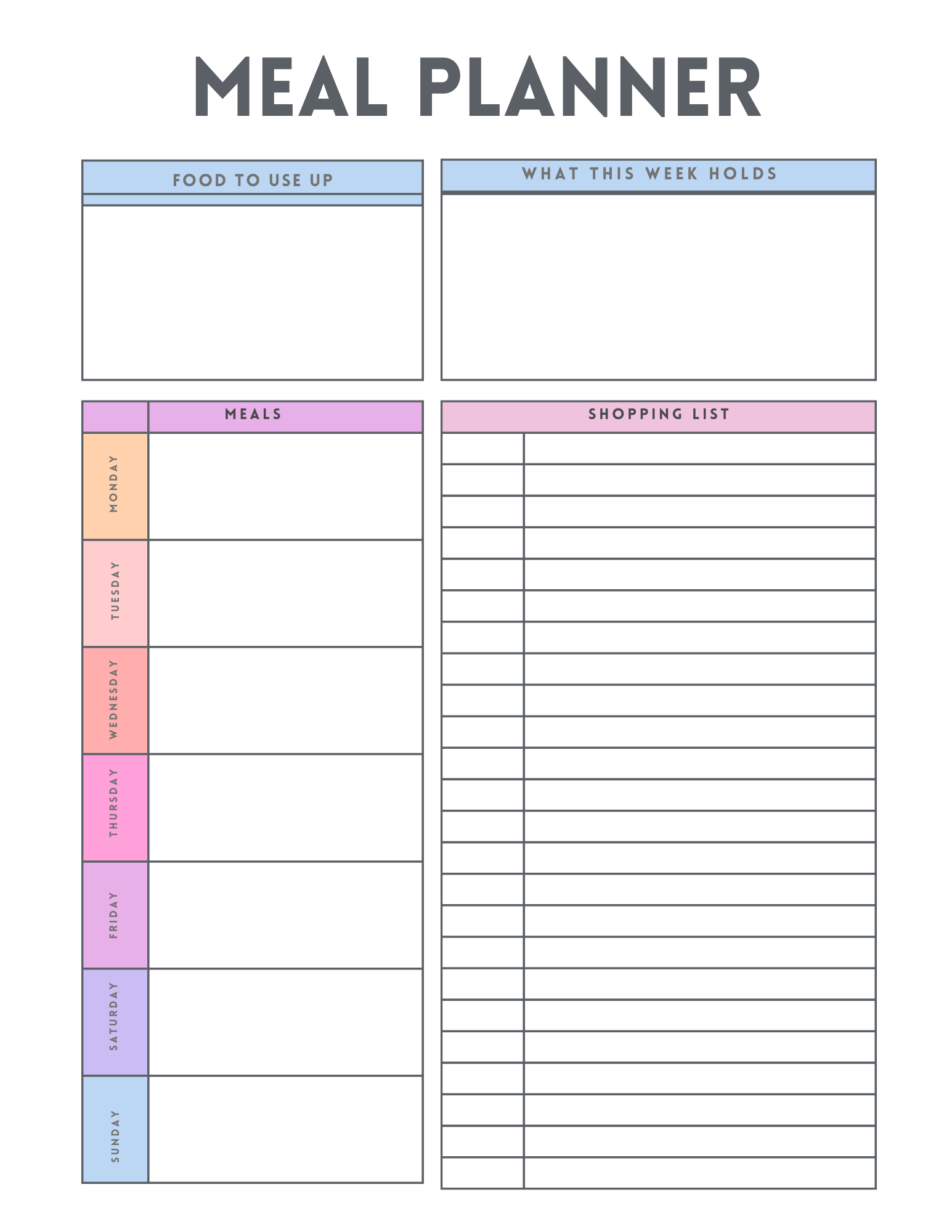
NOTE: You can literally stop here. Plan basic meals each week beginning with what you already have. You’ll slowly acquire useful ingredients and continue to use what’s in your pantry. But if you DON’T want to meal plan and simply want to cook from a stocked, organized kitchen, keep reading! Here is my meal planning PRINTABLE if you’re interested!
if you’re interested!
4. Know your key ingredients.
Now that you’ve used up some inventory, you’re ready to re-stock the basics.
Ask yourself, “What are my go-to meals, and what are the ingredients they call for?”
Collect the items you need for your family favorite recipes. Beware of buying anything too unique, because chances are that it’ll end up getting forgotten on a back shelf.
5. Stock your starches.
Keep a selection of starches (rice, pasta, bread, potatoes, oats, bread etc.) on hand. This will make it to where you always have something to pair with your protein. Having a variety will also ensure you don’t end up eating one thing 7 days a week.
Pick one type of rice, one or two pastas, and some good potatoes. Have some oats on hand for that morning porridge. Have some bread in the pantry or freezer. You’ll find it’s so much easier to build meals when you have these basics.

6. Acquire some aromatics.
Get your hands on some onions and fresh garlic. These are terrific foundations for almost any meal.
7. Keep sauce bases.
Most meals are better with a sauce. This could be a condiment, but it could also be a homemade pasta sauce, cream sauce, or gravy. Think of the sauces in your best-loved meals, and make sure you have the cans, jars, or bottles required.
8. Have a spice arsenal (enough but don’t overdo it).
We want our food to be flavorful, and spices help us get there. Again, think about the meals you enjoy. What flavor profile do they have?
Do you make a lot of Mexican food? You’ll want chili powder, paprika, and cumin.
Does your family enjoy Italian or Greek? Get oregano, basil, and maybe some garlic powder.
Collect your army of spices, and get ready for some flavor!
9. Store enough salt.
Salt is crucial, and we miss it if it’s gone. I recommend a sea salt that you can grind yourself.
10. Consider non-meat proteins and healthy fats.
Things like beans, legumes, nuts, and nut butters are rich in protein and/or fat and are great additions to your diet.
11. Keep some nutritious oils and vinegars.
Oils build flavor. Consider stocking some healthy fats like Coconut Oil, Olive Oil, and some good old-fashioned butter.
Vinegar adds a well-rounded taste. Think white, apple cider, balsamic, or white wine.
12. Don’t forget a thickening agent (flour, cornstarch, oats, or cornmeal).
Depending on what you like to make, you very well may need to thicken your food. Gravies, certain sauces and soups, stews, and pies all require some thickening agent. Flour and cornstarch are great options, but in some cases, you could use oats or cornmeal too!

13. Cap Categories By Shelves
Designate different shelves for different categories. See them as helpful boundaries for how much you can buy of each type of item. This way you won’t as easily overstock, and you’ll always know where to find what you’re looking for.
14. Consolidate with baskets.
Baskets and other containers can be really helpful organizing tools. Consider putting all your spices or baking ingredients in a basket. Perhaps your cans can be housed in a large tote.
15. Be realistic about what you actually use and need.
Think logically about what you actually cook with and can reasonably get through. Have what you need, but don’t overdo it.
16. Limit packaged snacks.
It’s great to keep a few snacks on hand for your kids or yourself, but try to limit it. This will save space in your pantry and encourage more eating at meals.
17. Resist the urge to overbuy.
Let yourself run out of something. In most cases, you can find a substitute or run into the store in a pinch. It’s better to use what you have until it’s gone than overbuy and rebuy ingredients because you forgot you had them in the first place.
***
So there you go! 15 tips for organizing your pantry for good! I hope this was helpful, and I’ll also include a Pantry Staples Checklist below that might be useful! This is not an exhaustive list, and some things might need to be refrigerated once opened, but hopefully it will at least get the wheels turning!
Happy organizing!
FAQ about Pantry Organization
1. Do I need any special containers or labels for organizing?
No, you don’t. Sometimes these things just make organization too complicated to do and maintain. But if you would enjoy/find it helpful, feel free to find some mason jars and cute labels.
2. What is the best way to maintain organization?
Develop a meal planning system. Or, make it a habit to check inventory every week. Don’t overbuy, and make sure to consistently use what you have. Remember to cap categories by shelves, and remember that just because something is on sale doesn’t mean you need to buy it.





Leave a Reply