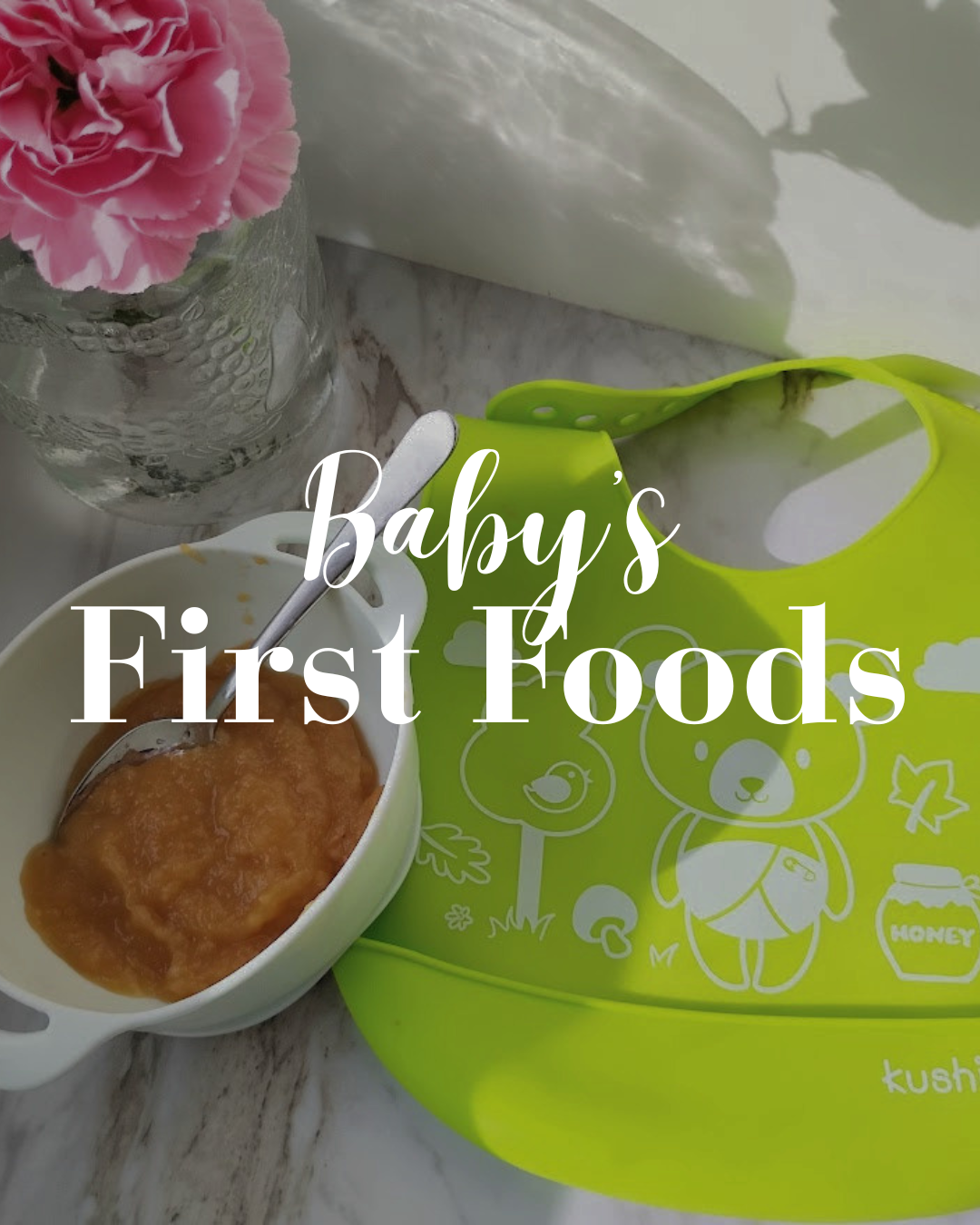
Is your baby ready for solid food? Where do you start? How do you introduce it? When do you give them what?
New moms can feel overwhelmed and nervous for this life transition. They want to set their babies up for success to have a healthy relationship with food, avoid picky eating, and most of all keep them safe.
Because there are so many opinions out there and so much noise on the topic, it can feel daunting to even begin.
Today I want to try to help. Together, we’re going to debunk 5 myths surrounding baby foods and then share some first food ideas to try.
So let’s dive in.
5 Baby Food Myths
1. I need to pick the perfect first food.
Like with anything, moms can get obsessive about doing things right. They may wonder about what is the “perfect” first food to feed their baby. Is it banana? Is it fortified baby cereal? Is it one of the common allergens? Surely it’s avocado.
The truth is, there’s no perfect first food. Your child will be no better off if they have banana or baby cereal, and giving them one or the other doesn’t make you a better mom. Over time, your child will try most foods, make healthy or unhealthy choices, and perhaps even develop allergies. Obviously there are ways we can help set them up for success, but in general, we do not carry as much power over their food choices as we think we do. We can relax.
2. I should start solids early.
If your baby is nursing well and doesn’t seem overly interested in food, don’t panic. You don’t need to start on solids early.
3. I need to force my baby to eat.
Your baby’s tummy is very small. They probably don’t need as much solid food as you think they do, and if they are under one and still nursing well, think of solid food as simply a supplement and a learning experience.
If they are resisting food that’s offered, don’t panic, and don’t try to force them to eat. Let them explore. Offer encouragement. Keep giving them opportunities to try new things, and then don’t worry. They will eat more when they’re ready.
4. I need prepackaged “baby” food.
There are a lot of prepackaged foods marketed as “baby food.” From cereal to crackers to purees, there are so many ways to blow our budgets. Baby-specific foods are really unnecessary, and as long as your baby is getting enough iron through other sources (i.e. red meat, etc.), you probably don’t need to buy prepackaged food.
Keep things simple. Give them what you’re eating as long as it’s safe to do so (i.e. not a choking hazard). Offer them basic food like fruits, soft veggies, yogurt, cheese, meat, and grains. This will not only save you money but will get them used to eating normal meals.
5. I’m going to mess them up.
Moms can worry that they’ll mess up their kids. They can worry that they’ll do it all wrong.
Obviously, there are bad situations and bad choices that negatively affect kids, but most moms are doing their best. Most kids will develop a normal relationship with food. Almost all kids will love fruit and bread, sort of enjoy meat, and struggle to eat their veggies. They will probably eat a lot of healthy meals and occasionally enjoy MacDonald’s.
So don’t worry, Mama. Your baby will be okay. You’re doing a great job.

First Food Ideas
1. Banana
Bananas are an easy baby food, because they are not only delicious and nutritious, but they require almost zero preparation. You can cut the fruit into small, bite-sized pieces. You can simply give your young one a soft chunk to try, or you can put some on a spoon.
2. Peanut Butter
Peanut butter is a filling, healthy fat that is also really tasty. Your little one will probably enjoy trying some. Just make sure to watch for any signs of an allergic reaction, and don’t give them too much at a time to avoid choking.
3. Scrambled Eggs
Scrambled eggs are a great first food for your baby. Full of protein and easy to administer, scrambled eggs are a winner. Offer them a soft, small piece, and watch them enjoy.
4. Yogurt
You could give your little one plain yogurt or some mixed with a little banana, applesauce, or peanut butter. Yogurt is tasty and has probiotics and protein to nourish your little one.
5. Bread
Remove the crust, and offer your baby small pieces of really soft bread. To increase the nutrition, consider serving sourdough or a hearty, whole-wheat that doesn’t have seeds or extras that might cause choking.
6. Avocado
Full of healthy fats, avocado is a really nutritious first food. It’s also naturally soft, so if your baby doesn’t have a lot of teeth, he could still enjoy it.
7. Cheese
Cheese is scrumptious. Don’t you think? Soft and flavorful, your baby might just find cheese to be their favorite food ever.
8. Soft-cooked carrots
Boil, steam, sauté, or roast some carrot, and see if your little one enjoys a bite. Carrots are rich in vitamin A, and your little one might find them pleasantly sweet.
9. Oatmeal
You can buy baby oatmeal or make regular oatmeal yourself. Oatmeal is rich in protein and fiber, and it is a wonderful breakfast option.
10. Applesauce
Applesauce is so fun, isn’t it? Just make sure to opt for the “no-sugar added,” and give your baby the gift of a sweet treat.

Introducing solids can be such a fun, exciting time in your baby’s development. It really is a milestone for both of you.
FAQ about Toddler Food
1. What are some tips for avoiding choking?
Make sure to give your child small, soft pieces of food. Keep them upright. Don’t offer too much at one time, and be watchful.
2. My baby doesn’t like being spoon-fed at all. What should I do?
Opt for things he can self-administer. Rather than serving a bowl of oatmeal, try pieces of baked oatmeal. Instead of soup broth, offer the cooked meat and veggies. Let them learn to feed themselves.
If you really want to feed them something, try giving them something to hold or eat simultaneously. This may help distract them long enough for you to give them a few bites.


Leave a Reply