
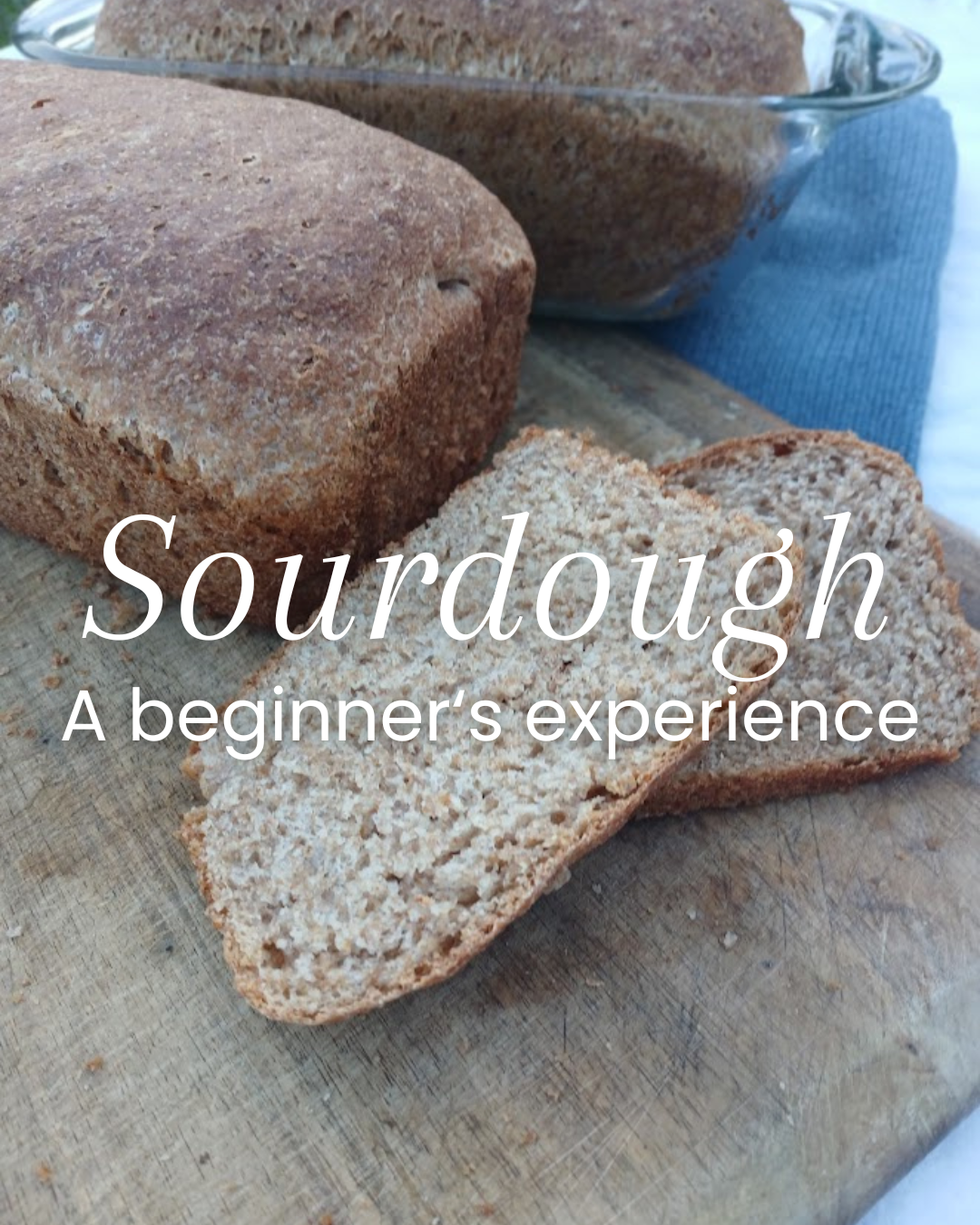
Earlier this year, I embarked on my sourdough journey. I had often enjoyed eating sourdough from the store, and my friend had suggested I try my hand at it. I must say I was intimidated. I am not great at following recipes, and sourdough seemed very complicated and unforgiving. I much prefer recipes where you can add a dash of this or a sprinkle of that and have it turn out just fine. Sourdough didn’t feel like it fit the bill.
And so I hadn’t tried it.
Around Christmastime last year, I started watching Farmhouse on Boone’s Youtube channel. She has been dubbed the “Queen of Sourdough,” and I slowly started to get inspired. She claimed that sourdough wasn’t as complicated as people made it seem, or at least it didn’t have to be. It could fit seamlessly into one’s life, especially that of a stay-at-home-mom. And it was a way to create and feed my family something nutritious.
And so I decided to give it a go.
I watched a few more videos and asked a relative for some sourdough starter. I had two glass loaf pans and not much more, but I dove in.

And it was delicious! I used all-purpose flour, and I made a few loaves to start. Since I didn’t own a Dutch oven, I tried putting a pan of water in with the dough to create steam. I then bought whole wheat flour and learned how to make it whole grain.
The process hasn’t been without mishap, but overall, it’s been a positive experience, and I’ve learned a few things along the way. May I share them with you?
- Making bread is rewarding.
There’s something calming about digging your hands in some flour and bringing a dough together. It’s exciting to do stretch and folds and see the dough becoming more elastic. The sour smell is strangely delicious, and to see the finished product at the end is very satisfying. I think we were made to work with our hands and be creative. Baking sourdough is not only both those things, but it’s a way to care for my family and care for their health.
- Sourdough is easier than I thought.
I had thought making sourdough was really complicated, and I’m sure it can be. But it also can be simple. I have basically used the same basic sandwich bread recipe since the beginning. While I have ventured out to try pizza dough, waffles, and burger buns, I have also stuck with what’s tried and true, changing things here and there. My loaves aren’t necessarily pretty, the type you might find photographed on Instagram. But they’re hearty, delicious and doable.
- Adding heat can speed things up.
My stove has what looks like a fifth element in the center back that serves as a warming spot. I can adjust the level of heat and then set either my starter or dough on it. The warmth from the element can help accelerate the process, and if I’m crunched for time, I can use this feature to my advantage.
- I shouldn’t skimp on flour.
When I first mix my ingredients, my dough looks shaggy and crumbly, and it’s tempting to use less flour to help. However, I’ve found that if my starter is healthy and active enough (and add some BC humidity), I need the full amount of flour called for. At least that has been my experience. If the dough is just not coming together, I will sometimes wet my hands a few times. The dough will transform and become less crumbly. So don’t worry if it seems really dry at first.
- I need to give ample time for the second rise.
I’ve found it’s important to give enough time for the second rise (when my dough is actually in the loaf pans). Because I inevitably knock a lot of air out of my dough when shaping the loaves, I should give them as much time as possible to rise before baking to try and ensure big, fluffy loaves.
6. An internal thermometer can tell me if the bread is baked.
I initially set a timer while baking my loaves, but when the timer is up, I stick a thermometer in to make sure they’re baked. I usually aim for 205 degrees Fahrenheit. This way I can know for sure they’re done. How awful would it be to go to all this work and end up with doughy bread?

- Don’t let the finished loaves dry out.
I usually bake my loaves at night, and so I always have to decide what to do with them while they cool. Sometimes I’ve sliced them. Sometimes I’ve just covered them with a tea towel. But I find that if they’re not fully cool when I go to bed, it’s important to cover them partially with a plastic bag. That way some air can get out, but some moisture can stay in and prevent the loaves from drying out.
Here is the recipe I use for my sandwich bread and the other sourdough recipes I’ve tried.
Sourdough Sandwich Bread – Farmhouse on Boone.
Easy Sourdough Waffles Recipe – Farmhouse on Boone
Easy Homemade Sourdough Pizza Dough Recipe – Farmhouse on Boone
Sourdough Hamburger Buns – Farmhouse on Boone
Let me know in the comments section if you make sourdough and any tips or lessons you’ve learned along the way!




Leave a Reply